
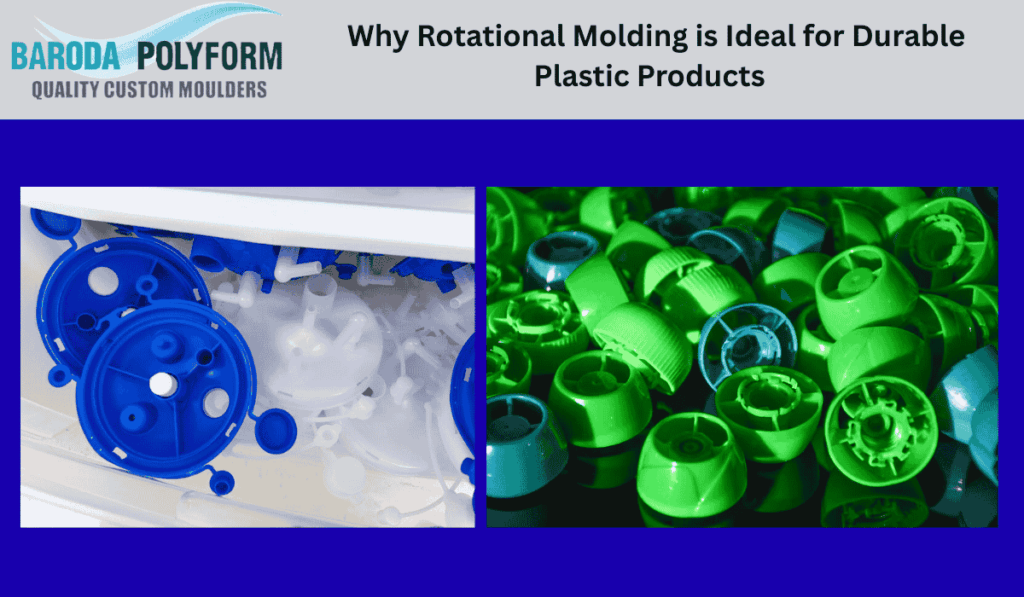
In today’s manufacturing landscape, durability and cost-efficiency are key factors in producing high-quality plastic components. Industries ranging from automotive to agriculture rely on advanced processes to meet growing demands for strength and design flexibility. Among these techniques, rotational molding products stand out for their ability to deliver consistent quality, structural integrity, and long-lasting performance. This process has gained recognition for creating robust items that withstand harsh environments without compromising on design versatility.
Key Advantages of Rotational Molding for Long-Lasting Plastic Solutions
One of the most significant benefits of this process is its ability to produce hollow, seamless items without joints or weld lines. Unlike other manufacturing methods, where weak points can develop at seams, this approach ensures uniform thickness throughout the structure. This uniformity enhances strength and minimizes the risk of cracks, making it ideal for applications that demand reliability over time.
Another advantage is material efficiency. The process uses a precise amount of raw material, which reduces waste and optimizes resource usage. This not only makes it cost-effective but also aligns with sustainable manufacturing practices. Manufacturers can also incorporate additives such as UV stabilizers or flame retardants, improving performance in demanding conditions.
Design flexibility is another reason why this method is widely preferred. It allows for the creation of complex shapes, intricate contours, and varying wall thicknesses without requiring additional assembly. As a result, businesses can produce custom molded plastic products tailored to specific needs, whether for industrial containers, water tanks, or playground equipment.
The durability of items produced through this process is particularly noteworthy. These products are resistant to impact, corrosion, and extreme weather conditions. This makes them suitable for both indoor and outdoor applications. Industries such as marine, construction, and healthcare benefit from this durability, as it ensures long-term usability with minimal maintenance.
Additionally, the process supports the integration of inserts, threads, and other components during manufacturing. This reduces the need for secondary operations, saving time and labor costs. For companies looking to streamline production while maintaining high standards, this is a significant advantage.
Key benefits include:
- Seamless construction that eliminates weak points
- Uniform wall thickness for improved strength
- High resistance to environmental stress and chemicals
- Design versatility for complex and large shapes
- Cost-effective production with minimal material waste
Another important factor is the relatively low tooling cost compared to other manufacturing methods like injection molding. This makes it an attractive option for small to medium production runs. Businesses can experiment with designs and prototypes without incurring significant expenses, enabling innovation and faster time-to-market.
The process also allows for color customization without additional painting or finishing. Pigments are added directly to the material, resulting in consistent coloration throughout the product. This not only enhances aesthetics but also prevents issues like peeling or fading over time.
From an environmental perspective, this manufacturing method is increasingly relevant. Many materials used are recyclable, and the reduced waste generation contributes to a lower environmental footprint. Companies aiming to adopt eco-friendly practices find this approach aligned with their sustainability goals.
In terms of applications, this technique is incredibly versatile. It is used to produce storage tanks, fuel containers, kayaks, medical equipment housings, and even furniture. The ability to create large, hollow items without compromising structural integrity makes it unique among plastic manufacturing methods.
Furthermore, the process supports low-pressure production, which reduces stress on molds and extends their lifespan. This results in lower maintenance costs and consistent product quality over extended production cycles. For manufacturers, this translates into long-term savings and reliability.
Another noteworthy aspect is the ability to produce multi-layered items. This feature allows manufacturers to combine different materials or properties within a single product. For example, a tank can have an outer layer for strength and an inner layer designed for chemical resistance. This level of customization enhances functionality and broadens application possibilities.
The growing demand for custom molding products highlights the importance of adaptable manufacturing techniques. Businesses are increasingly seeking tailored solutions that meet specific operational requirements. This process meets that demand by offering flexibility without compromising durability or cost efficiency.
Moreover, the absence of high-pressure injection reduces the likelihood of defects such as warping or internal stress. This ensures consistent quality across production batches, which is essential for industries that require precision and reliability.
In conclusion, this manufacturing method has proven to be an effective solution for producing durable, versatile, and cost-efficient plastic components. Its ability to create seamless structures, support complex designs, and minimize waste makes it a preferred choice across various industries. As businesses continue to prioritize quality and sustainability, Rotational molding remains a valuable technique for meeting modern manufacturing needs.