
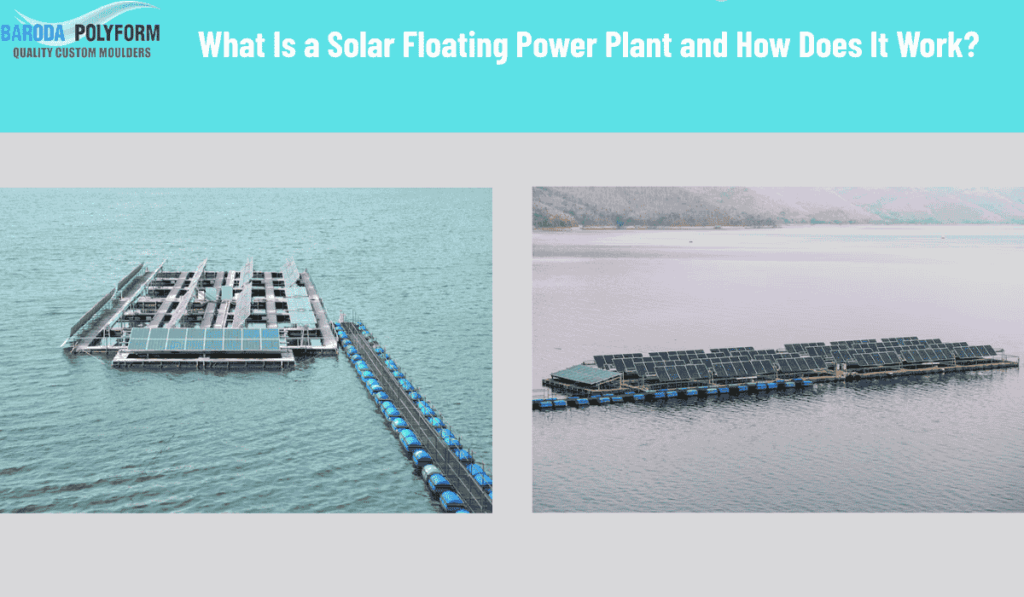
As global energy demand rises alongside land constraints, renewable infrastructure is increasingly shaped by spatial innovation. One such advancement involves generating electricity over water bodies rather than occupying valuable land. A solar floating power plant represents this shift an engineered system designed to harness sunlight using photovoltaic modules mounted on buoyant platforms, delivering clean energy while optimising underutilised surfaces.
Understanding the Concept of Water-Based Solar Generation
Floating solar technology, often deployed on reservoirs, lakes, and industrial water bodies, adapts conventional photovoltaic principles to aquatic environments. Instead of ground-mounted structures, panels are installed on specially designed floats that remain stable despite water movement.
These systems are anchored securely to maintain alignment and spacing, ensuring consistent exposure to sunlight. Electrical components are protected against moisture, while cabling connects the array to onshore substations for energy transmission.
Why Water Surfaces Offer Strategic Advantage
Land scarcity and competing land-use priorities present challenges for large-scale renewable projects. Water bodies, particularly artificial reservoirs and treatment ponds, offer expansive, unobstructed surfaces without displacing agriculture or development.
Additionally, the cooling effect of water can improve photovoltaic efficiency. Lower operating temperatures help panels perform more consistently, contributing to improved output over time.
Core Components That Enable Functionality
A floating solar installation relies on several integrated elements working in unison:
- Buoyant platforms engineered for load distribution
- Photovoltaic modules secured for stability
- Mooring and anchoring systems to maintain positioning
- Electrical infrastructure designed for moisture resistance
Together, these components create a resilient energy-generating structure capable of long-term operation in aquatic conditions.
Installation and Anchoring
Anchoring strategies vary based on water depth, surface fluctuation, and reservoir size. Some systems use bank anchoring, while others rely on bottom-fixed moorings.
Flexible connections allow the structure to adjust to water level changes without compromising integrity. This adaptability is crucial for reservoirs influenced by seasonal variation.
Environmental Interaction and Ecosystem Considerations
Floating installations can offer environmental benefits when designed thoughtfully. By shading portions of the water surface, they may reduce evaporation and limit algae growth.
Environmental assessments guide placement to avoid disruption to aquatic ecosystems. Responsible design ensures coexistence with water usage for irrigation, treatment, or storage.
Energy Transmission From Water to Grid
Generated electricity is transmitted via underwater or floating cables to onshore infrastructure. Inverters convert direct current into grid-compatible alternating current before distribution.
Protective conduits and monitoring systems safeguard electrical components against corrosion and mechanical stress, maintaining consistent energy delivery.
Manufacturing Precision and Engineering Expertise
The effectiveness of floating installations depends heavily on material quality and engineering precision. Durability, UV resistance, and load-bearing capacity are essential for long-term performance.
This demand has led to specialised development among floating solar manufacturers, who focus on materials and designs capable of withstanding prolonged exposure to water and weather conditions.
Adaptability Across Different Water Bodies
Not all water bodies present the same conditions. Industrial reservoirs, drinking water storage, and hydroelectric dams each require tailored design approaches.
Systems are customised based on wave action, water chemistry, and operational constraints, ensuring stability and efficiency across diverse environments.
Maintenance and Operational Considerations
Maintenance strategies prioritise accessibility and safety. Modular designs allow sections to be serviced without dismantling entire arrays.
Routine inspections focus on electrical connections, float integrity, and anchoring systems. Preventive maintenance reduces downtime and preserves output consistency.
Integration With Existing Infrastructure
Floating systems integrate well with existing water infrastructure. Hydroelectric reservoirs, for example, benefit from shared transmission assets and complementary generation profiles.
This hybrid approach enhances energy yield without requiring significant new land acquisition.
Addressing Climatic and Weather Challenges
Exposure to wind, rain, and temperature variation requires robust engineering. Materials are selected to resist degradation, while structural layouts minimise wind resistance.
Design simulations account for extreme weather scenarios, ensuring resilience under variable conditions.
Supporting Renewable Expansion Without Land Conflict
One of the most compelling aspects of this technology is its ability to expand renewable capacity without competing for land. This advantage is particularly relevant in densely populated or agriculturally intensive regions.
As adoption increases, discussions around floating solar system in india often highlight its potential to support energy goals while preserving land resources.
Economic and Resource Efficiency
Although initial investment may be higher than ground-mounted alternatives, long-term benefits include improved efficiency, reduced evaporation losses, and optimised land use.
Over time, these factors contribute to competitive lifecycle costs and improved sustainability metrics.
Regulatory and Planning Frameworks
Successful deployment requires alignment with water authorities, energy regulators, and environmental agencies. Clear guidelines support safe integration without compromising water quality or usage rights.
Planning frameworks continue to evolve as experience with water-based installations grows.
Innovation Driving Future Adoption
Advancements in materials, anchoring technology, and monitoring systems continue to refine performance. Research into hybrid systems and advanced coatings further enhances durability and output.
Innovation ensures that floating solar remains adaptable as energy needs and environmental considerations evolve.
Role in National Energy Strategies
Water-based photovoltaic projects are increasingly viewed as strategic assets within renewable portfolios. Their scalability and land-neutral footprint align with long-term energy planning objectives.
They offer a pathway to increase clean energy capacity without intensifying land-use pressures.
Conclusion
Floating photovoltaic technology represents a thoughtful response to modern energy challenges, combining efficiency with spatial innovation. By utilising water surfaces for generation, these systems expand renewable capacity while conserving land and supporting environmental balance. As deployment accelerates, the floating solar power plant in india continues to gain relevance within national energy strategies. Companies such as Baroda Polyform contribute to this evolution by supporting durable, well-engineered solutions that enable reliable performance in water-based renewable infrastructure.