
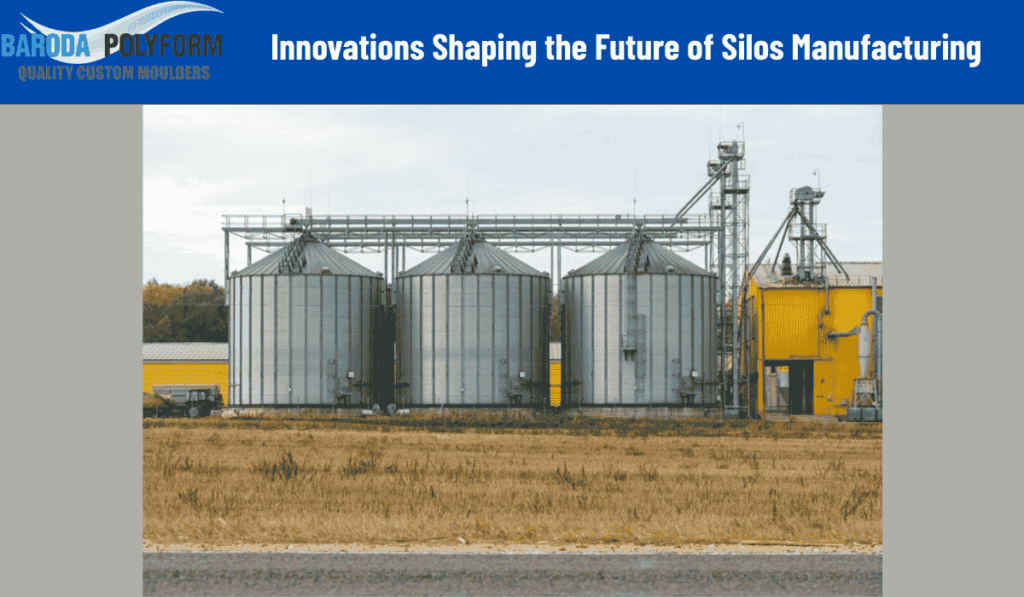
Storage infrastructure plays a quiet yet critical role in industrial efficiency, agricultural stability, and supply chain resilience. As industries scale and material handling requirements become more complex, storage systems are evolving beyond simple containment. Modern design, material science, and process automation are redefining how bulk materials are stored, protected, and managed. Within this changing landscape, silos manufacturers in india are responding to rising expectations by integrating innovation into every stage of design and production.
The Shift From Static Storage to Intelligent Systems
Traditional silo structures were designed with a singular purpose: holding material securely. While this remains essential, contemporary requirements demand far more. Storage units are now expected to support flow optimisation, material integrity, safety monitoring, and operational efficiency.
This shift has encouraged manufacturers to rethink form and function. Design decisions increasingly account for discharge behaviour, aeration efficiency, and compatibility with automated handling systems, transforming storage into an active component of operations rather than a passive one.
Material Innovation Driving Performance
Material selection has become a defining factor in modern storage solutions. Advances in polymer engineering, corrosion-resistant alloys, and composite materials are enabling longer service life with reduced maintenance.
High-performance materials offer resistance to moisture, chemical exposure, and temperature variation. This durability supports consistent performance across diverse environments, from agricultural settings to industrial processing facilities.
Lightweight Structures With Structural Integrity
One of the most notable developments is the ability to achieve strength without excessive weight. Optimised wall thickness, ribbed reinforcement, and engineered geometry allow structures to maintain load-bearing capacity while reducing material usage.
This balance improves transport efficiency and simplifies installation, supporting faster deployment without compromising reliability.
Modular Design and Scalable Capacity
Modern operations often evolve over time, requiring storage systems that can adapt accordingly. Modular construction enables capacity expansion without complete replacement.
Scalable designs allow additional units or extensions to integrate seamlessly with existing infrastructure. This flexibility supports long-term planning while reducing capital disruption.
Enhanced Flow Dynamics and Material Protection
Material flow behaviour significantly affects efficiency and product quality. Poor flow can lead to blockages, segregation, or degradation.
Innovations in internal geometry and surface finish improve discharge consistency. Smooth internal walls, optimised hopper angles, and flow-assist features reduce friction and support controlled material movement.
Automation and Monitoring Integration
Digital transformation has reached storage infrastructure. Sensors and monitoring systems are now integrated to track fill levels, temperature, humidity, and structural stress.
These insights enable predictive maintenance and inventory management, reducing downtime and preventing material loss. Real-time data transforms storage units into connected assets within broader operational networks.
Sustainability as a Design Priority
Environmental responsibility increasingly shapes manufacturing decisions. Efficient material use, recyclable components, and extended lifespan contribute to sustainable outcomes.
Designs that minimise waste during production and reduce energy consumption during operation align with broader sustainability goals across industries.
Addressing Diverse Industry Requirements
Different sectors place distinct demands on storage solutions. Agricultural applications prioritise ventilation and pest resistance, while industrial uses may require chemical compatibility and structural reinforcement.
This diversity has driven specialised development paths, resulting in tailored solutions rather than generic designs.
Growing Demand for Polymer-Based Solutions
Polymer-based storage has gained prominence due to its resistance to corrosion and reduced maintenance requirements. Compared to traditional materials, polymers offer consistent internal conditions that protect stored contents.
Within this trend, plastic storage silos have emerged as a preferred option in applications where hygiene, moisture resistance, and longevity are critical.
Improved Manufacturing Techniques
Advanced fabrication methods have enhanced consistency and quality. Rotational moulding, precision welding, and controlled curing processes ensure uniform thickness and structural integrity.
Automation within production lines reduces variability, supporting predictable performance across batches.
Safety Enhancements Through Design
Safety considerations extend beyond structural strength. Access systems, pressure relief mechanisms, and secure discharge points are now standard features.
Designs increasingly account for operator interaction, reducing risk during inspection, filling, and emptying processes.
Logistics and Installation Efficiency
Ease of transport and installation has become a competitive advantage. Designs that reduce on-site assembly time minimise disruption and labour costs.
Prefabricated components and simplified anchoring systems support quicker commissioning and earlier operational readiness.
Climate Adaptability and Environmental Resistance
Storage systems must perform reliably under varied climatic conditions. UV resistance, thermal stability, and weatherproofing ensure consistent behaviour across regions.
These attributes are particularly important for outdoor installations exposed to prolonged environmental stress.
Supporting Agricultural Supply Chains
Agriculture remains a major driver of storage innovation. Protecting crops post-harvest is essential for food security and economic stability.
Advancements in aeration control, pest prevention, and moisture regulation support quality preservation throughout storage cycles.
Within this context, grain storage silos manufacturers continue to refine solutions that balance capacity, protection, and operational efficiency.
Customisation and Application-Specific Design
No two operations are identical. Customised dimensions, discharge mechanisms, and access features allow solutions to align precisely with site requirements.
This bespoke approach ensures optimal performance rather than compromise.
Long-Term Cost Efficiency
While innovation may influence upfront cost, long-term benefits often outweigh initial investment. Reduced maintenance, extended lifespan, and improved efficiency contribute to lower total ownership cost.
Decision-makers increasingly evaluate storage systems through this long-term lens.
The Role of Collaboration and Engineering Expertise
Innovation is rarely isolated. Collaboration between engineers, operators, and material specialists drives meaningful advancement.
Feedback from real-world use informs iterative design improvements, ensuring that solutions remain practical and effective.
Conclusion
The future of bulk storage lies in intelligent design, advanced materials, and integrated technology. As industries demand greater efficiency, safety, and adaptability, storage systems are evolving into engineered solutions rather than static containers. These advancements enhance performance across agriculture, manufacturing, and logistics, supporting resilient supply chains and sustainable operations. In this evolving landscape, the silos container continues to redefine its role, shaped by forward-looking approaches from manufacturers such as Baroda Polyform, who align innovation with practical application and long-term value.